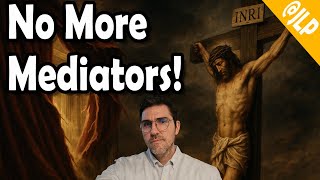
Jesus' Words ONLY: The path back to the True Church!
VideoTranscript
This is the video’s transcript, lightly formatted. Tap a time to jump to that moment.
The religious elite stood in their flowing robes, their felactories broad and prominent, their tassels long and impressive. They love the best seats in the synagogues, the respectful greetings in the marketplaces, the titles that rolled off people's tongues, rabbi, teacher, father. They had built an entire system, layer upon layer of tradition and interpretation until the simple truth of God's love was buried beneath an avalanche of human additions. Then Jesus spoke and his words cut through their elaborate construction like a sword through silk. But you are not to be called rabbi, for one is your teacher, the Christ, and all of you are brothers. Call no man on earth your father. For one is your father who's in heaven.
In Matthew 23. In just a few sentences, Jesus dismantled their entire religious hierarchy, their carefully constructed system of spiritual authority, and pointed to something radically different, a family of equals, children of one father, students of one teacher. Can you imagine if we took Jesus seriously about this? I mean, really seriously. What if we stripped away 2,000 years of accumulated tradition, institutional structure, and cultural influence, and just looked at what Jesus actually taught? What if churches today were built solely on the foundation of his words in the Gospels? The transformation would be breathtaking and honestly a little terrifying for those who invested their lives in maintaining the current systems.
Let's start with the most obvious change. The whole structure of religious authority would collapse and be rebuilt from the ground up. Jesus never established a hierarchy of priests, bishops, cardinals, popes, or clergy. He never created a clerical class that stood between God and his people. Instead, he said things like, "But he who is greatest among you will be your servant. Whoever exalts himself will be humbled, and whoever humbles himself will be exalted. Again, Matthew 23, the greatest is the servant.
That flips everything upside down, doesn't it? And think about what Jesus demonstrated when he washed his disciples feet. The creator of the universe, the perfect mirror reflecting divine glory, got down on his knees with a basin and a towel. If I then the Lord and the teacher have washed your feet, you also ought to wash one another's feet. John 13:14.
This wasn't about establishing a footwashing ceremony. This is about showing that in his kingdom, authority looks like service. Leadership looks like love. And greatness is measured by how low you're willing to go to lift others up. If churches truly followed only the gospels, you wouldn't have a professional clergy class who are the sole dispensers of spiritual truth and sacraments. Jesus promise was radically democratic. But the counselor, the Holy Spirit, whom the father will send in my name, will teach you all things in John 14:26.
All things. Not some things that you need a priest to interpret. not certain mysteries that only the theologically educated can understand. All things, every believer a student of the spirit, every heart a potential dwelling place for divine wisdom. And speaking of sacraments, oh boy, would that change. Jesus instituted exactly two symbolic practices, baptism and communion. That's it, two.
And both were strikingly simple. Baptism, going underwater and coming back up, symbolizing death to the old life and resurrection to the new. Communion, bread and wine shared in remembrance. Do this in memory of me. Luke 22:19.
Not elaborate rituals requiring special authorization to perform, not complex ceremonies with prescribed formulas, just simple, profound acts of remembrance and identification. I wanted to take a moment to tell you about my book, The Broken Mirror: Rediscovering Our True Nature in Christ. Readers call it a fantastic book where you will feel yourself discovering your identity in Christ. One reviewer praised it as five-star material for the spiritual mystic or group Bible study. It's time to escape legalism and shame. Discover you're already God's beloved child with divine nature flowing through you with what reviewers describe as excellent writing style and elegant pros like a campfire discussion with a knowledgeable and gifted recon tour journey from Genesis to Revelation uncovering your true identity. This book shows how to access God's peace, wisdom, and strength from within.
Your struggles become opportunities for divine light to shine through. available in hardcover, paperback, Kindle, and audiobook. The link to the book is in the video description. May God bless your journey along his path for you. But here's where it gets really interesting. If we only had the Gospels, the whole concept of salvation would shift dramatically. Jesus never once said, "Pray this prayer and you'll be saved."
He never taught a formula for getting your ticket to heaven punched. Instead, he talked about transformation, about becoming like children, about being born again, not as a one-time legal transaction, but as a complete reorientation of your entire being. Remember when Nicodemus came to Jesus at night? Jesus didn't give him four spiritual laws or lead him in a sinner's prayer. He said, "Most certainly, I tell you, unless one is born a new, he can't see God's kingdom." John 3:3. born a new, born from above, a complete restart, a fundamental transformation of identity.
And when Nicodemus struggled to understand, Jesus didn't simplify it into a formula. He went deeper, talking about the spirit blowing where it wishes, about heavenly things, about the son of man being lifted up. If churches followed only Jesus teachings, salvations salvation wouldn't be reduced to a moment of mental ascent to certain facts about Jesus. It would be understood as what Jesus actually proclaimed, a call to follow him, to take up your cross, to lose your life and find it. If anyone desires to come after me, he said, let him deny himself, take up his cross and follow me. For whoever desires to save his life will lose it, but whoever will lose his life for my sake will find it. Matthew 16:24 and 25.
That's not a prayer you pray once. That's a daily dying to the false self, a continuous journey of transformation. And the obsession with determining who's in and who's out, Jesus would have none of that. When his disciples tried to stop someone casting out demons in Jesus' name because he wasn't part of their group, Jesus rebuked them. Don't forbid him, for there is no one who will do a mighty work in my name and be able quickly to speak evil of me. For whoever is not against us is on our side. Mark 9:39 and 40.
The boundaries were far more fluid than we've made them. The kingdom far more inclusive than our denominations suggest. And speaking of denominations, can you imagine trying to explain to Jesus why his followers have split into thousands of competing groups, each claiming to have the correct interpretation of his message? He prayed, begged, really that they may all be one, even as you, Father, are in me and I in you, that they also may be in us. John 17:21.
Not uniformity of practice or belief, but unity of spirit, of love, unity that reflects the very unity of God. If churches followed only the gospels, the emphasis wouldn't be on doctrinal purity that divides, but on love that unites. The whole approach to scripture itself would change, too. Jesus treated scripture as a living word that pointed to him, not as a law book to be dissected and debated. You search the scriptures because you think that in them you have eternal life, and these are they which testify about me, yet you will not come to me that you may have life. John 5:39-40.
The religious leaders knew every jot and tit of scripture, but they missed the whole point. It was all pointing to the person standing right in front of them. If churches followed Jesus' approach, Bible study wouldn't be about winning arguments or proving points, but about encountering the living word through the written word. And here's a big one. The focus on the afterlife would shift dramatically to focus on the here and now. Yes, Jesus talked about eternal life, but listen to how he defined it. This is eternal life.
They should know you, the only true God, and him who sent you, Jesus Christ. John 17:3. Eternal life isn't primarily about duration, living forever somewhere else. It's about quality, knowing God, experiencing divine life, participating in the very nature of God right now. The kingdom of heaven isn't just a future destination. Jesus said, "The kingdom of God is within you." Luke 17:21.
If churches based everything on the gospels alone, the gospel message wouldn't be you're a sinner bound for hell unless you accept Jesus to go to heaven when you die. It would be you're a broken mirror designed to reflect God's glory and Jesus has come to clean you, heal you, restore you to your original purpose and fill you with divine life starting right now. That's a radically different message, isn't it? The approach to money and possessions complete revolution. Jesus said more about money than almost any other topic. And none of it fits well with the prosperity gospel or the building programs that consume so many churches. Don't lay up treasures for yourselves on earth where moth and rust consume and where thieves break through and steal, but lay up for yourselves treasures in heaven.
Matthew 6:19 and 20. In that challenging word to the rich young ruler, go sell what you have and give to the poor and you will have treasure in heaven and come follow me. Mark 10:21.
If churches truly follow Jesus economic teachings, they look less like corporations with buildings and budgets and more like communities of radical generosity. The early glimpse we get in Acts isn't an aberration. It's what naturally happens when people take Jesus seriously about possessions being tools for love rather than markers of success. The treatment of sinners and outcasts would be unrecognizable from much of current church practice, too. Jesus didn't set up holiness clubs for the righteous. He ate with tax collectors and sinners. He touched lepers.
He spoke to Samaritan women. He told stories where the heroes were good Samaritans and repentant tax collectors while the villains were religious leaders confident in their own righteousness. Those who are healthy have no need for a physician but those who are sick. I came not to call the righteous but sinners to repentance. Mark 21:17.
Churches built solely on the gospels would be hospitals for the broken, not museums for the saints. They'd be known for who they welcomed, not who they excluded. The woman caught in adultery, the tax collector in the tree, the thief on the cross. These would be the models for how grace operates, not the carefully vetted and approved testimonies of the already respectable.
prayer would be transformed from performance to intimacy. Jesus teaching on prayer was revolutionary in its simplicity. No need for elaborate formulas or special mediators. Just when you pray, enter into your inner room and having shut your door, pray to your father who is in secret. Matthew 66. And the model prayer he gave shockingly brief and direct. Our father in heaven.
Matthew 6:9, not distant deity, but intimate aba. If churches follow Jesus way, prayer meetings would be less about impressing others with eloquence and more about children talking honestly with their dead. The role of women would be radically elevated. In a culture where women's testimony wasn't even valid in court, Jesus chose women to be the first witnesses of his resurrection. He taught Mary of Bethany as a rabbi would teach a male disciple. He engaged a Samaritan woman in theological discussion. He praised the faith of the Syrophenician woman.
If churches built themselves on the gospels alone, the artificial barriers to women's full participation would crumble. The perfect mirror reflected God's image in both male and female, showing that both are equally designed to reflect divine light. The concept of holiness would shift from external conformity to internal transformation. Jesus reserved his harshest words not for the obvious sinners, but for those who clean the outside of the cup and the platter, but within they are full of extortion and unrighteousness. Matthew 23:25.
Holiness in the Gospels isn't about following rules perfectly. It's about having a heart aligned with God's heart, about being a clean mirror that accur accurately reflects divine love. If churches operated solely from the gospels, they wouldn't be known for what they're against, but for what they're for. Jesus didn't come with a list of condemning declarations. He came with good news. Literally, that's what gospel means. Good news for the poor, freedom for prisoners, sight for the blind, liberty for the oppressed.
The year of the Lord's favor, not the decade of the Lord's judgment. The understanding of spiritual warfare would be less about fighting human enemies or culture wars and more about the internal battle against the false self. Jesus' temptation in the wilderness wasn't against flesh and blood, but against the fundamental temptations to operate from self rather than spirit, to use divine power for selfish purposes, to test God's faithfulness, to gain kingdoms through compromise. If churches follow this model, they'd spend less time fighting external battles and more time helping people overcome the internal obstacles to reflecting God's light. The mission of the church would be beautifully simple. Go and make disciples of all nations, baptizing them in the name of the Father and of the Son and of the Holy Spirit, teaching them to observe all things that I commanded you. Matthew 28:19 and 20.
Not converting them to a religious system, not inducting them into an institution, but making disciples, students, learners, followers who are being transformed into the image of their teacher. And maybe most radically, the understanding of human identity and potential would be completely revolutionized. Instead of the total depravity and worm theology that dominates so much of Christianity, we'd embrace Jesus' stunning declarations. You are the light of the world. Matthew 5:14. You are God's. John 10:34.
The kingdom of God is within you. Luke 17:21. We'd understand ourselves as broken mirrors being restored, not worthless sinners hoping for mercy. We'd see our destiny not as escape from earth, but as co-raigning with Christ in a renewed creation. If churches truly built themselves on the gospels alone, worship would be less about performance and production and more about spirit and truth. God is a spirit and those who worship him must worship in spirit and truth. John 4:24.
Not in this mountain or that temple, not with this style or that tradition, but in the reality of our spiritual connection and the truth of our identity as God's children. The expectation for miracles and supernatural ministry would be normal, not exceptional. Jesus didn't say a few special anointed people will do the works I do. He said,"Most certainly I tell you, he who believes in me, the works that I do, he will do also, and he will do greater works than these." John 14:12. If churches took this seriously, they wouldn't relegate healing and miracles to special services or traveling ministries. They'd expect God's power to flow through ordinary believers as naturally as light flows through clean glass.
Church discipline would be about restoration, not punishment. When Jesus outlined the process for dealing with sin in the community, the goal was always to gain your brother according to Matthew 18:15. Even the final step of treating someone as a gentile and a tax collector in Matthew 18:17 takes on different meaning when you remember how Jesus treated Gentiles and tax collectors with love, invitation, and hope for transformation. the gospel invitation itself would change from accept Jesus into your heart to follow me. It's not about adding Jesus to your life like a spiritual insurance policy. It's about complete reorientation about learning to live from a completely different source. Come to me all you who labor and are heavily burdened and I will give you rest.
Matthew 11:28. not believe these facts about me but come to me personal relational transformative. If we built our churches solely on the gospels, Christianity would look less like a religion and more like a movement, less like an institution and more like a family, less like a corporation and more like a community of transformed mirrors learning to reflect divine light together. The simplicity would be stunning. The freedom would be exhilarating. The transformation would be genuine. We've added so much.
Centuries of tradition, theological systems, cultural accommodations, institutional necessities, some additions might be helpful, but how many have obscured the brilliant simplicity of Jesus message? How many have turned the easy yoke into a crushing burden? How many have made the narrow way even narrower by adding requirements Jesus never mentioned?
What if? What if we dared to imagine church as Jesus described it? A gathering of broken mirrors being restored, reflecting divine light into dark places. A family of equals, all children of the same father. A community of learners, all students of the same teacher. A body where the greatest serve the least, where the last are the first, where children are the model and outcasts are welcome. A movement of love that transcends all boundaries.
Forgiveness that knows no limits and transformation that touches every aspect of life. This isn't about going backward or throwing everything out we've learned in 2,000 years. It's about going deeper, getting back to the source, making sure our foundation is actually what Jesus laid and not what we've constructed on top of it. It's about having the courage to ask, if Jesus walked into our churches today, would he recognize his own teachings? Would he see his own reflection and what we've built in his name? The truth is both challenging and liberating. Jesus message was scandalously simple and simply scandalous.
Follow me. Love God. Love others. Be light. Share what you have. Forgive endlessly. Serve humbly.
Trust completely. The kingdom is here. The kingdom is within you. You are more than you know. God is closer than you think. Everything is about to change. And in fact, it already has.
So let this be our prayer. Aba Father, give us the courage to return to the beautiful simplicity of your son's teachings. Help us see past the accumulated layers of tradition and institution to the radiant truth Jesus proclaimed. Show us how to be the church he envisioned. Not a building or a system, but a family of transformed mirrors reflecting your light. Strip away everything that obscures your glory and burdens your children. Help us embrace our true identity as your beloved children designed to reflect your nature called to follow Jesus in simple trust and radical love.
May we have the wisdom to hold loosely to human additions and tightly to Christ's actual words. transform us, restore us, and help us become the community of light Jesus died to create in his beautiful name. Amen. [Music]